
End of October and the creek bed is still dry.
The ‘water year’ (it starts October 1) is not off to a good start. In the last 4 weeks, no rain at all in my rain gauge; only fog condensation one morning: .005 inch (technically, ‘not measurable’). Here on the Kitsap Peninsula, October normally brings 3 to 5 inches of rain. My corner of it usually sees 3 to 4. Last weekend finally brought .55 inch, a welcome start, but that creek will need a few storms delivering 1 to 2 inches each to refill its bed.
During the not-wet days ahead, autumn rituals help us get the garden ready for the cold and snow the Old Farmer’s Almanac tells us is coming. Knowing that plants need some moisture and the soil needs protecting, we can watch the forecast, look for dew on the ground, monitor plants, and give them a nurturing hand. These 5 autumn rituals are a place to begin.
1. Conduct a plant health evaluation.
Are plants looking healthy and robust? Did all your plants survive the summer’s hot, dry spell? Are stems and branches intact? Is the ground surface slightly moist? A ‘yes’ to all of these is a good indicator your garden will delight again in the spring. These are steps you can take to prepare plants for cold weather.
- Replace plants that have seen better days and add new ones to fill in any gaps. Autumn’s cool, rainy days help the roots settle in and get established by spring’s warmer days. Mulch the new plantings to protect the roots and the soil.
- Gently prune small broken stems so the plant can self-seal the cut before the cold. Save any major tree pruning for when trees are fully dormant (February to March).
- Without rainstorms, plants need some supplemental water to carry them through to spring. About 1/8 inch a week keeps most perennial beds happy in cooler weather. Many times, a few days of morning dew is all they need. Tip: if the toes of your shoes get wet walking through grass this season, your planting beds are getting enough moisture too.
- Give the lawn a last haircut to 4 inches. The longer blades help protect the soil and the roots.
2. Ready planting beds for winter.
Some plants keep working through winter at a slower pace, and some go fully dormant. Each needs a slightly different hand.
- Add 2 to 3 inches of mulch, including the leaves falling from the trees. Gather leaves that have fallen on constructed surfaces (driveway, patio, path, roof, gutters) and use them on planting beds (ornamental and vegetable). Mulch protects the soil from compaction during heavy rainstorms, lets the rain percolate more slowly, helps prevent erosion, and adds nutrients to the soil as it decomposes.
- Woody-stemmed plants protect their inner structures and keep functioning through winter, at a slower rate. Let the woodies be until spring.
- Herbaceous plants go fully dormant, shedding their leaves and stems at the root crown. That can leave the roots exposed to cold they can’t recover from. Give them a ‘leaf cut’ that keeps 2 to 3 inches of stem, and use the cut leaves to protect the root crown. If slugs are feasting on the spent leaves, move the invaders to another home, then use shredded bark mulch as the protective layer instead.
- Manage the weeds (those pesky plants in places you don’t want them to be). Pulling them out by their roots is the most effective control, although removing seed heads will prevent future propagation. If there are lots, divide and conquer. Pick a small area to work on for 15 minutes every day. Better yet, develop the habit of walk-by weeding. As you monitor your garden throughout the year, see a weed, pull a weed.
3. Ready trees for winter.
Even as trees slow down for the cooler months, their roots still need water to carry them through winter.
- Until the rainstorm pattern sets in, give your young trees a drink every 10 to 14 days. Mature and established trees have extensive root systems that have already learned to adapt to the seasonal weather.
- If leaves fall on grass, rake some into a 3-inch-high ring around the trunk, without piling them up on the trunk. Use the rest elsewhere in the garden or in the compost bin.
4. Ready irrigation systems for winter.
Both automated and manual systems benefit from a few preventive actions.
- For automated systems (underground or surface), drain the water out to prevent pipes from bursting in freezing weather. Reset the controller to stop water cycles when the rainstorm pattern sets in.
- Drain manually operated hoses, too. Coil the hose on a reel or on the ground so you won’t trip over it on the darker, shorter winter days.
- Have a watering can or bucket handy to give plants a drink during extended dry, cold periods in winter.
5. Two don’ts.
- Don’t fertilize now; wait until spring. Plants are entering dormancy, and rain dissolves the fertilizer and can carry it into the water table or nearby streams and ponds, polluting them. Plants can use fertilizer again when the soil temperature is 50°F or warmer.
- Don’t dig or work the soil when it’s wet. Wet soil compacts and loses the air pockets roots need. Wait 2 to 3 days after a rain.
Want this list in the garden shed? Download the printable Autumn Garden Checklist (PDF).
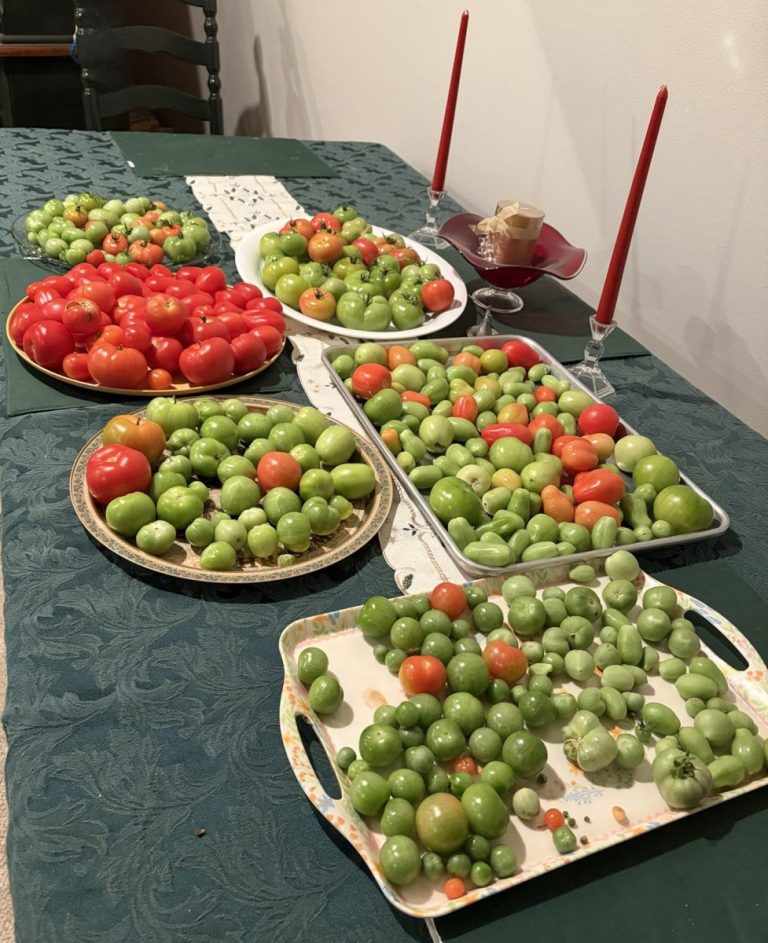
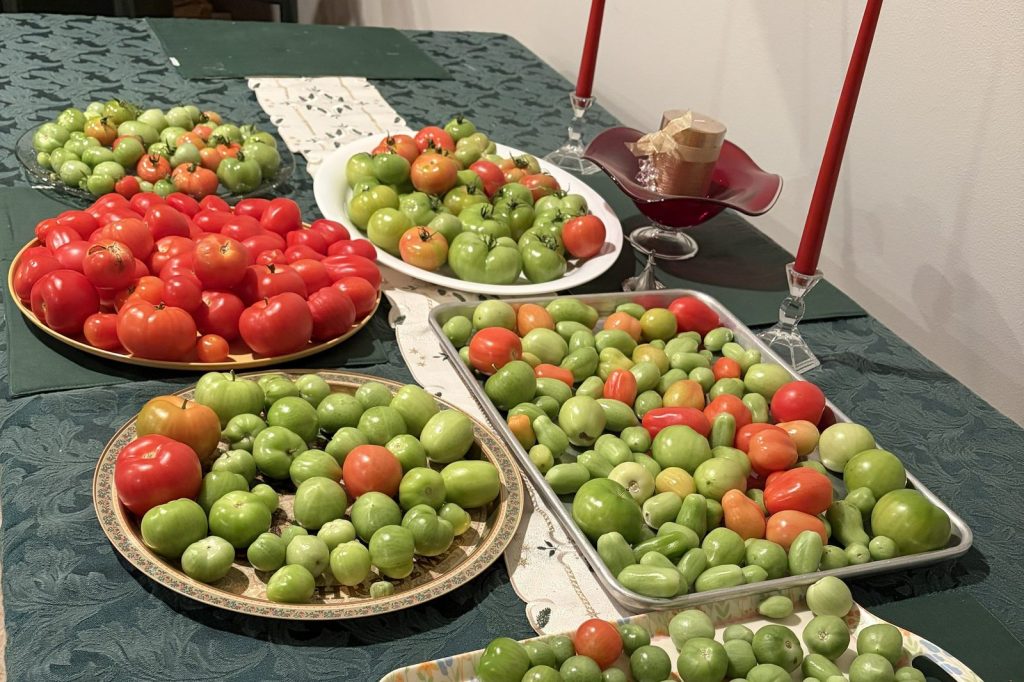
I’ve enjoyed my daily walks on the cool, sunny days of the last 4 weeks. The sun’s soft warmth was a balm for tension-tight muscles. The dry weather also meant the last of the tomatoes (yes, the ones transplanted at half past June) were harvested without juggling an umbrella, harvest bowl, and wet fruit. Trays of ripening tomatoes in various shades of ‘shiny green’ becoming red, covering the dining table, are my holiday centerpiece.
What’s your autumn ritual, in the garden or out of it? Tell me about it here.
If your plant health check turns up a symptom you can’t name, a Garden Tour Conversation brings me to your garden for two hours to sort out what’s working, what isn’t, and what to do next.
No commitment — just clarity.