
Two books. One made me cry for the birds. The other inspired me to protect what I loved most: the wonder and diversity of nature. That was long before I learned there was a word for what I felt.
Maybe it was the smell of rain on cedar. A chickadee working through the shrubs while you held your morning coffee. The music of fallen leaves underfoot. You didn’t decide to feel calmer. It happened on its own. There’s a name for that feeling: biophilia. Nature knows the secret.
Nature’s Language
Biophilic garden design is the heart of every collaboration when we create your garden refuge. Biophilia means ‘love of life.’ Biologist Edward O. Wilson made the word popular in his book “Biophilia,” where he described it as our inborn pull toward living things and the way they grow and change.
As a kid, I’d crouch over a small hole in the soil for an hour, watching ants forage in and out and all around it. Or I’d turn over rocks to see who lived underneath. I took it all in with every sense, all at once. Maybe you did too. That curiosity didn’t leave when we grew up. Your body still knows that nature heals, calms, and restores us, the same way it did for our ancestors. It’s written into us.
What is biophilic garden design?
Scientists have studied this for decades, and their reviews keep landing in the same place: time among plants and green spaces is good for body and mind. If you’ve ever come home from a walk in the woods feeling lighter, none of that will surprise you. A biophilic garden is designed to evoke that feeling, and love of life guides every choice in the plan.
It’s taking the long view. Thinking seven generations out. Weighing what each choice will mean for the soil, the plants, the wildlife, and the people who’ll enjoy the garden long after the first planting. It’s being a steward of life, with a standard of care to match.
It’s seeing your garden as a community, not a problem to solve. Soil, plants, fungi, insects, birds, and you all live there together. A biophilic design works with that community, partnering with the others who live there.
And it starts with your point of view. How do you want to live in your garden? What’s your purpose for it? A biophilic garden design honors what you need while it supports the life that was there first, and it sets the stage for new partnerships to grow.
Evoking curiosity and wonder
Years ago, my son and I hiked the low foothills of Almaden Quicksilver County Park. The trail climbed, dipped, and bent out of sight, again and again. It turned into a contest between us: who would be first to say “no more corners”? Neither of us wanted to lose, so we kept going to see what was there. When one of us gave in, it was picnic time.
A garden can give you that same pull, right outside your door.
Like a storybook, careful placement of garden elements builds curiosity. Turn a page and there’s something new to discover. A biophilic design is the magic wand for wonder-making.
- A path that bends out of sight. A shrub border and a curving path add an air of mystery, and mystery invites you to go see what’s around the corner.
- Outdoor rooms sized for people. A sheltered place to sit, with a view of open sky or a distant vista (or a screen for the neighbor’s carport).
- Views from the inside out. Sight lines run from your windows into the garden and from the garden back to the house, so the garden is part of your day even when it’s pouring.
- Patterns that repeat. Textures, colors, and plants repeat from one part of the garden to the next, linking each view to the one beyond it. Nature’s own patterns, like the branching of a fern, are easy on the eyes, and researchers have found they help ease stress.
- Soft edges. The line between the planted garden and the wilder places around it blurs, so birds and other wildlife move through with ease.
Biophilia, Pacific Northwest Style
As in most places, weather sets the terms on the Kitsap Peninsula, and it can be wildly different in Hansville than it is in Gig Harbor on any given day. Our winters are wet and cool. Our summers are growing hotter and drier. The plants I choose already know how to handle both, and each one goes where it can thrive.
The heart of the garden is the blend: plants from other parts of the world with climates like ours, plus the natives that thrive in garden beds. They offer a wide range of sizes, flowers, and leaves that stay all year or drop in fall. Regional natives such as huckleberry, salal, elderberry, and Oregon grape feed and shelter the birds, bees, and other wildlife that grew up alongside them.
Garden Woes are symptoms
In more than 30 years of listening to Garden Woes, the same stories come up again and again.
“Nothing grows here.” Many neighborhoods are built by scraping off the topsoil, which leaves hard, packed dirt behind. That’s a fine surface for a house. It’s not so fine for a garden. The soil is missing the food, organic matter, and helpful fungi that plants depend on.
“I improved the soil, and it still died.” Sometimes the plant is in the wrong place for its needs: too much sun, too little water, or too cold in winter. Right plant, right place matters as much as good soil.
“It’s taken over.” Plenty of homeowners inherit shrubs planted too close together years ago, and now they’ve outgrown their space. When you space young plants for their full-grown size, a new bed looks empty at first. It’s tempting to fill it in. Most people do.
“But I watered it every day!” Sometimes the trouble is too much kindness. Roots need air as well as water, and a well-meant hose can drown them.
Each of these woes is a symptom of the same root cause: a disconnect from nature. Biophilic garden design treats the cause. Once you understand what your garden needs to thrive, you can build it and nurture it to restore, protect, and grow the community that lives there. That’s what I call a Garden for Life.
How we design your Garden for Life together
Over the years, I found a process that works for biophilic gardens. I call it the Garden for Life Roadmap, and it has four phases: Plan It, Design It, Build It, and Nurture It.
The first step is a Garden Tour Conversation, where we find the root causes of what’s not working and explore design ideas that support your goals. From there, we co-create your landscape design, and I support you through Build It and Nurture It with recommendations that are backed by science and tested in the field.
Want to see it unfold? Read The Landscape Design Process.
Seeds of stewardship
Those two books that started the story? Rachel Carson’s “Silent Spring” and John F. Kennedy’s “Profiles in Courage.” Those were the seeds. Over the years they grew, blossomed, and wound together into Garden Vision. It’s how I came to meet people like you and share what I learned about biophilia, sustainable landscape design, and the Garden for Life Roadmap.
It’s sowing seeds of stewardship: through thoughtful partnership, one garden at a time. Plant enough seeds, and a garden grows and your spirit is restored. Tend them well, and stewardship takes root. With enough of us tending, whole communities help restore Earth.
Let’s make a better world together.
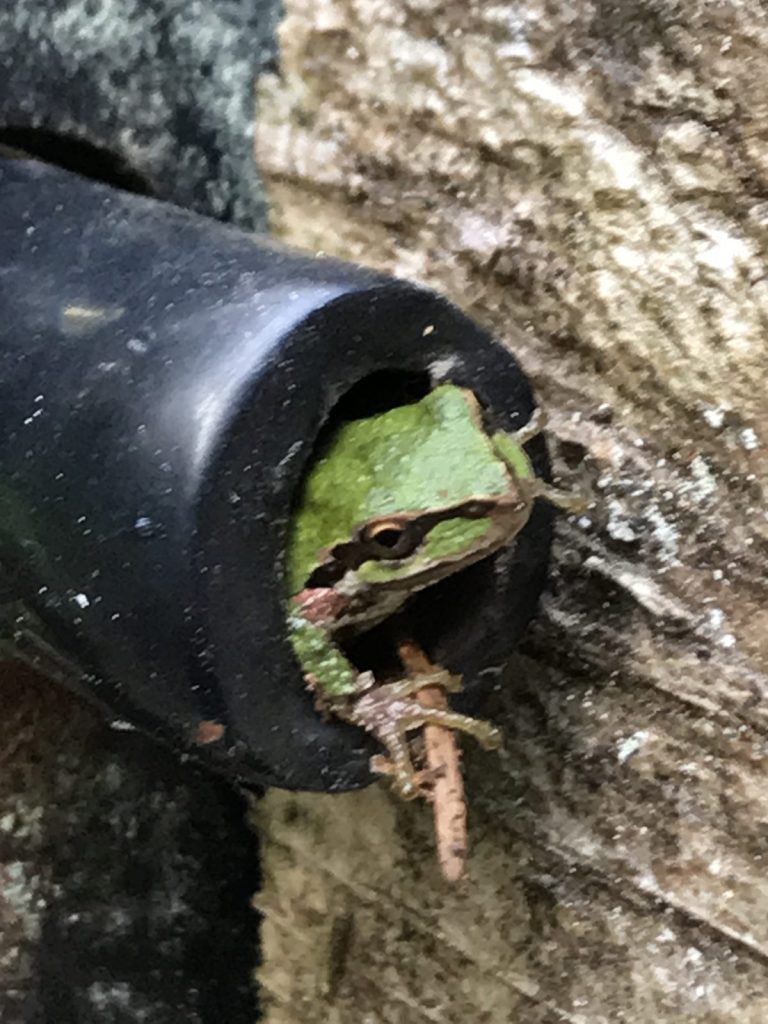
It began as daily necessity. Take the dogs out in the yard, morning and evening. Now, it’s a daily ritual to see who is new in the garden. Once, it was a green tree frog hiding in the kitchen garden gate latch. I listen to the sound of rain or leaves and gaze at the night sky, giving myself a gift – a pause to breathe, feel the calm rhythm, be still in biophilia.
What wonder entranced you as a child? Where in your garden do your shoulders relax?
Ready to see what your own garden is asking for? A Garden Tour Conversation brings me to your garden for two hours. We walk it together, and by the time we’re done, you have a personalized Fix-It List that’s yours to keep, plus one clear next step.
No commitment — just clarity.
Not ready for a visit? Start with the free guide, Secrets to Fixing the Top 5 Garden Woes.